

WeAct and KCM today announced that Verified Carbon Units (VCUs) from the Madagascar Clean Cookstove Project have received the ‘CORSIA – First Phase, 2024-2026 Eligible’ Label from Verra, marking a major milestone for international carbon markets and the implementation of Article 6 of the Paris Agreement.
The project is the first in the country to receive Letters of Authorization (LoAs) from Madagascar’s Designated National Authority for the Carbon Market (ANDMC) within the Office of Climate Change, Ministry of the Environment. This authorization is underpinned by corresponding adjustments recorded in Madagascar’s Article 6 Registry and formally reported in the country’s first Biennial Transparency Report (BTR).
As a result, the project is now a UNFCCC-recognised ‘Cooperative Approach’ (ID CA0043), and is now among the first projects globally to have issued fully CORSIA-eligible carbon credits based on BTR reporting assurance, rather than relying solely on Article 6 insurance mechanisms.
The milestone follows a multi-year Paris Agreement Article 6 pilot process in which the Government of Madagascar used the WeAct/KCM Madagascar Clean Cookstove Project as a test case to design and operationalise its Article 6 regulatory framework and procedures.
The pilot process was supported through an Article 6 capacity-building program guided by Pollination, which provided a pathway for the Government to develop national frameworks, approval processes and registry systems required for international carbon credit tracking, accounting and transfers.
Madagascar’s LoA Process
As noted in its UNFCCC reporting documentation, the Government of Madagascar has implemented a two-track Letter of Authorization (LoA) process which includes:
- LAMA: Reviewed and approved the activity at both the developer and project level, issuing Letters of Authorization of Mitigation Activity (LAMAs) that permit the international transfer of credits from that activity.
- LAMO: Once issued, the resulting authorized emission reductions (VCUs) were recorded in Madagascar’s national Article 6.2 Tracking Registry, with corresponding adjustments applied and formally confirmed in Letters of Authorization of Mitigation Outcomes (LAMOs).
The LAMAs and LAMOs together form Madagascar’s completed LoA, which has enabled the creation of Internationally Transferable Mitigation Outcomes (ITMOs) which have received corresponding adjustments in Madagascar’s Article 6 registry, and are eligible for compliance use under Phase 1 of the aviation sector’s CORSIA mechanism.
With this final step completed, the project’s VCUs have now met all three CORSIA eligibility requirements established by the CORSIA Technical Advisory Body (TAB) and Verra:
- Application of an eligible carbon standard and methodology under the Verified Carbon Standard (VCS);
- Confirmation of Article 6 authorization (LoAs) from the Madagascar government; and
- Final CORSIA Phase 1 labelling by Verra, following verification that the corresponding adjustments were correctly reported in Madagascar’s Biennial Transparency Report
Together with the range of required Article 6 reports submitted to the UNFCCC (see document links at end of this release), these steps ensure that the credits avoid double counting and meet the integrity requirements for use by international airlines under CORSIA.
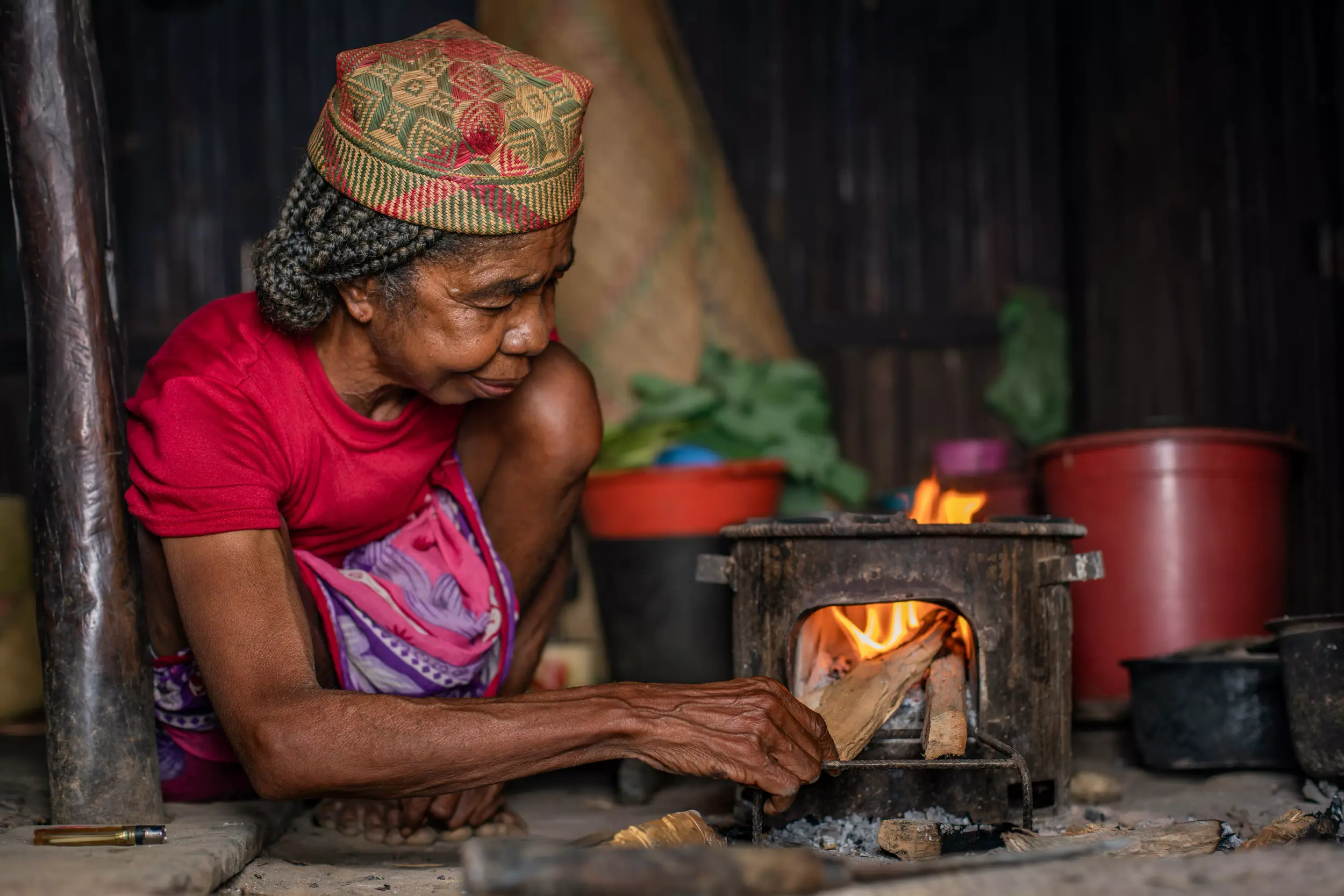
The project, which has distributed over half a million energy-efficient clean cookstoves to households across Madagascar, reduces emissions from traditional biomass cooking while delivering health, economic and environmental benefits to local communities.
Market Perspectives
Verra CEO Mandy Rambharos said “This milestone in Madagascar demonstrates what the future of carbon markets ought to look like: high-integrity, country-led, and fully aligned with global frameworks. By combining robust Article 6 authorization processes with CORSIA eligibility, this project shows how carbon markets can deliver real climate action while ensuring transparency and trust.”
“This is exactly how we scale impact: by working hand in hand with countries to turn ambition into measurable outcomes, while channeling climate finance to communities that need it most” she said.
Lloyd Vas, Head of Carbon Trading at WeAct, said the milestone highlights the role high-integrity projects can play in helping meet airlines’ rapidly growing demand for CORSIA-eligible credits.
“The CORSIA market is structurally short of eligible emissions unit (EEU) supply, so we’re incredibly excited to bring these credits forward at a time when airlines are actively seeking reliable compliance solutions.”
“Achieving full CORSIA eligibility through obtaining Letters of Authorization and formal UNFCCC BTR reporting is a major step for the market. It demonstrates that robust Article 6 processes can work in practice and that high-integrity projects can successfully navigate the full pathway from host-country authorization through to international compliance use.”
Vas said the project also demonstrates how international carbon markets can help deliver meaningful development benefits.
“What makes this particularly exciting is that the proceeds from credit sales will be reinvested back into Madagascar. Our goal is to expand the program and bring clean cooking solutions to communities across the country.”
“Cleaner stoves reduce fuel use, improve household air quality and create real climate benefits. Scaling that impact across Madagascar is something we’re very proud to support.”
Together with its project partner Korea Carbon Management (KCM), WeAct plans to bring around 2.7 million CORSIA-eligible credits to market, offering them directly to end-user airlines as well as through established intermediaries and auction platforms already used by aviation buyers.
Thomas Winklehner, CEO of KCM said “Of this volume, approximately 900,000 credits have been sold or allocated to airlines through forward contracts, leaving around 1.8 million CORSIA credits available for sale.”
“We will be placing these credits directly with airlines, including delivering on existing agreements, while also making them available through exchanges, intermediaries and auction facilities that airlines are already engaging with.”
“Our focus is getting high-integrity supply into the hands of airlines that need it, while ensuring the revenues flow back into expanding climate solutions on the ground in Madagascar.”
The Madagascar Clean Cookstove Project now stands as a leading example of how Article 6 implementation, host-country oversight and voluntary carbon standards can work together to deliver fully authorised international carbon credits with clear climate and development benefits.

Article 6 Reporting Documentation Links
UNFCCC Article 6 reporting documentation that is required for, and underpins Madagascar’s BTR reporting is linked below, noting that as a result of this reporting, the project has been formally recognised as an UNFCCC Article 6 ‘Cooperative Approach’ (ID CA0043).
- KCM Madagascar Clean Cookstove Project Article 6.4 Initial Report View on UNFCC CARP
- KCM Madagascar Clean Cookstove Project Cooperative Approach View on UNFCCC CARP
- Madagascar Annual Information Report (AEF) View on UNFCCC CARP
- Madagascar Biennial Transparency Report View on UNFCCC BTR Portal
- Madagascar ANDMC Article Registry Hub (LoA Repository) View ANDMC A6 Registry Hub
For more information or to discuss CORSIA credit procurement and trading, please contact Brad Kerin, General Manager at WeAct at brad@weact.com.au.
Read more insights like this


Trying to understand what good looks like?
Clck below to understand more about our approach to delivering measurable, verifiable, and impactful carbon credit projects.
